












Everything You Need to Know About Aspheric Lenses
aspheric lenses, spherical lenses, benefits of aspheric lenses
Discover the advantages of aspheric lenses over traditional spherical lenses.
Everything You Need to Know About Aspheric Lenses
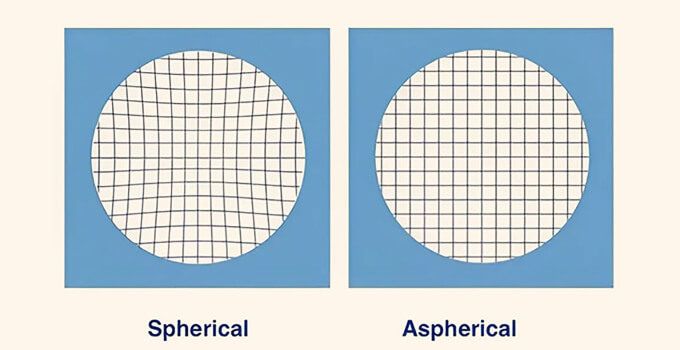
When it comes to lens surface design, there are two main types: spherical and aspheric. Aspheric lenses are designed to achieve thinner profiles by altering the curvature of the lens surface. Unlike traditional spherical lenses, which can increase distortion and aberrations—leading to blurry images, warped vision, and a narrower field of view—modern aspheric designs correct these issues, delivering sharper vision and a wider viewing area.
With aspheric lenses, you not only get a lighter, thinner, and flatter lens, but you also enjoy the same high impact resistance for safe everyday wear.
Why Choose Aspheric Lenses Over Spherical Lenses?
Traditional spherical lenses often cause peripheral distortion, limiting your field of vision. Advances in optical technology have made aspheric design an optical breakthrough, minimizing edge aberrations and providing a wider, more comfortable viewing range.
Compared to spherical lenses, aspheric lenses have:
1. Clearer Vision
Special coatings on aspheric lenses enhance clarity and deliver a more comfortable visual experience.
2. Lightweight Comfort
You’ll barely notice you’re wearing them—perfect for all-day comfort.
3. Natural Appearance
With reduced magnification or minification, your eyes look more natural, and objects appear true to life.
How to Identify Aspheric Lenses
When comparing lenses made of the same material and prescription, aspheric lenses are noticeably flatter, thinner, and offer a more natural view. Looking at a lens against a fluorescent light, a spherical lens will reflect a straighter image, while an aspheric lens—due to its varying curvature—will show more curve in the reflection.
Spherical lenses are generally thicker and distort peripheral vision, especially for higher prescriptions. They can also make the wearer’s eyes appear smaller or larger. Aspheric lenses address these issues by reducing center and edge thickness, eliminating peripheral distortion, and maintaining a natural appearance.
For example, a -5.00 DS aspheric lens is about 26% lighter than its spherical counterpart. With a flatter surface, objects—near or far—look natural and undistorted, reducing eye strain over long periods.
Who Should Consider Aspheric Lenses?
· First-time eyeglass wearers (students, office workers) who want minimal adaptation discomfort.
· Contact lens users who need a backup pair of glasses with a natural viewing experience.
· High prescription wearers who don’t want their eyes to appear too small or large.
· Those seeking lighter, thinner lenses for better comfort.
· People with significant prescription differences between eyes.
If you’re buying glasses online, buyglasses.com offers factory-direct aspheric lenses at affordable prices with guaranteed quality. Many coatings that typically cost extra are included free of charge—making it an excellent choice for your next pair.

20
This article was written by the buyglasses.com team. Buy glasses at factory prices on buyglasses.com.
-
Shop
-
About
-
Tip & Guides
-
Social
 Facebook
 TikTok
 Instagram
Copyright © buyglasses.com. All rights reserved.
